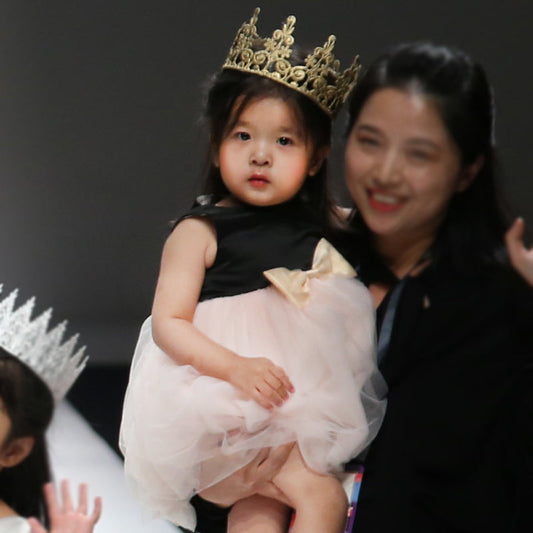
How to Choose a Children’s Ceremony Dress for Every Special Moment
There are certain moments in childhood that deserve a little more thought.
A first birthday. A wedding. A piano recital. A family portrait. A christening. A long-awaited celebration.
For adults, these may simply appear as events on the calendar. For a child, however, they can become some of the earliest memories of standing in front of a room, being photographed with the people they love, or feeling that a particular day is somehow different from all the others.
That is where a ceremony dress begins to mean more than clothing.
At HANAKIMI, we believe children’s occasionwear should never be about making a child look older. It should help her feel comfortable, confident and beautifully herself — while giving an important moment the sense of occasion it deserves.
So how should parents choose the right dress?
The answer begins not with trends, but with the moment itself.
1. Flower Girl Dresses: Elegant Enough for the Ceremony, Easy Enough to Move In
A flower girl dress has a very particular role.
It needs to feel special enough to belong within a wedding, while still allowing a child to walk comfortably, sit through a ceremony and move naturally throughout the day.
For younger flower girls, overly long trains, heavy embellishment and restrictive bodices can quickly become uncomfortable. A better approach is to focus on proportion.
Soft tulle, lace, clean necklines and gently structured skirts create a formal silhouette without overwhelming a small frame.
White, ivory, blush and pale pastel shades remain timeless choices, but the most important detail is balance.
A flower girl should look like herself — simply dressed for a very special day.
At HANAKIMI, we often pair flower girl dresses with a bonnet, delicate shoes or a restrained hair accessory rather than adding decoration everywhere at once.
A complete look should feel considered, not crowded.
2. Recital & Concert Dresses: Designed Around Movement
A performance dress has different requirements from a party dress.
For a young pianist, violinist or vocalist, appearance matters, but movement matters just as much.
A pianist needs to sit comfortably at the instrument.
A violinist needs freedom through the shoulders and arms.
A child walking onto a stage needs to feel secure rather than distracted by her clothes.
For this reason, recital dresses benefit from thoughtful structure.
A skirt should have enough volume to look graceful under stage lighting, but not so much that it becomes difficult to sit in.
Sleeves should frame the upper body without restricting movement.
The dress should also remain visually balanced from a distance, since concert audiences often see the performer from several metres away.
This is one reason HANAKIMI does not believe a children’s performance dress needs excessive embellishment.
On stage, the child — and what she has worked so hard to perform — should remain the focus.
The dress should frame the moment, not compete with it.
3. Birthday and Party Dresses: Celebration Without Overdressing
Birthday dressing allows for a little more playfulness.
Colour, tulle, bows, florals and imaginative silhouettes can all become part of the celebration.
But even here, we prefer to preserve a sense of childhood.
A party dress should allow a child to walk, play, sit down for cake and enjoy the day without constantly needing her outfit adjusted.
For this reason, shorter or mid-length silhouettes can often work beautifully.
Soft pink, powder blue, ivory, black, floral prints and delicate contrasts can each create very different moods.
A birthday dress does not need to look like a miniature evening gown.
Sometimes one memorable detail — a sculptural sleeve, a floral waist, a beautifully shaped skirt — is enough.
Good children’s design often depends as much on knowing what to leave out as what to add.
4. Everyday Occasion Dresses: When the Moment Is Special, but Not Formal
Not every meaningful childhood occasion happens in a ballroom.
Some happen over afternoon tea.
Some happen during a family lunch, a holiday, a portrait session or a visit to grandparents.
For these moments, an everyday occasion dress can be more useful than a fully formal gown.
The idea is simple: polished enough to feel special, relaxed enough to wear naturally.
Lighter silhouettes, softer fabrics and restrained detailing make these dresses easy to style with cardigans, bonnets, flats or simple socks.
They also give families more opportunities to rewear a beautiful piece rather than saving it for one single event.
For HANAKIMI, ceremony is not always about formality.
Sometimes it is simply about choosing to treat a small moment with care.
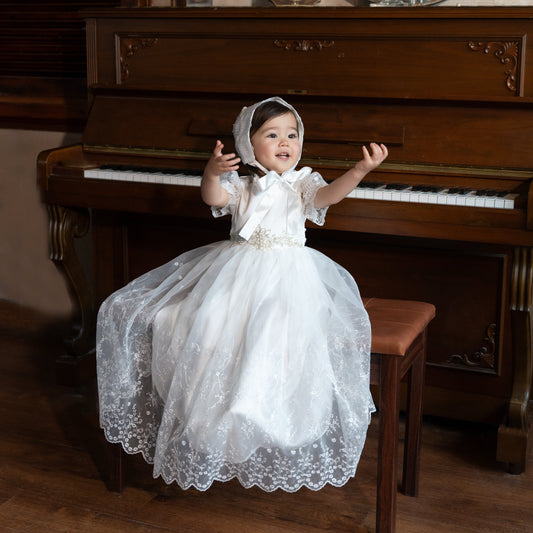
5. Baby Ceremony Sets: Dressing the Earliest Milestones
Some of the most meaningful occasions arrive before a child can remember them herself.
A first-month celebration, 100-day milestone, christening, first birthday or family portrait may later exist only through photographs and the stories parents tell.
This is why baby ceremony dressing carries a different kind of emotional value.
For babies, comfort must come first.
Soft linings, gentle seams, lightweight bonnets and easy closures matter far more than elaborate construction.
A coordinated baby ceremony set might include:
- a soft ceremony dress;
- a lace or cotton bonnet;
- pre-walker shoes;
- a personalised bib;
- a keepsake gift box.
Rather than treating these pieces as separate products, we think of them as part of one visual language.
The bonnet frames the face.
The shoes complete the silhouette.
The dress gives the moment its sense of occasion.
Together, they create something that feels prepared rather than assembled at the last minute.
6. Why Bonnets Still Matter
The bonnet is one of HANAKIMI’s most recognisable categories.
Historically, bonnets belonged naturally within European childrenswear, but their appeal today goes far beyond nostalgia.
A well-designed bonnet gently frames a child’s face, completes a ceremony look and can provide visual balance when a child is too young for elaborate hairstyling.
For babies with fine or still-growing hair, this can be especially useful.
No complicated hairstyle is required.
The bonnet becomes the finishing detail.
Different styles can also create very different moods:
Blossom Joy brings floral softness and a garden-inspired feeling.
Cloud Kiss focuses on lightweight comfort and gentle everyday wear.
Lace Whisper leans toward christenings, milestones and more formal occasions.
Victoria Archives draws from historical European childrenswear and archival silhouettes.
And Sunny Heaven, one of HANAKIMI’s long-running sun-hat collections, brings a more functional expression of the same belief: children’s accessories should be beautiful, wearable and relevant to real life.
7. One Dress Does Not Need to Belong to Only One Season
Parents often ask whether a ceremony dress is suitable for summer or winter.
In practice, occasionwear is usually worn in controlled indoor environments — wedding venues, concert halls, restaurants, hotels and studios.
Rather than treating formalwear like seasonal outdoor clothing, it is often more useful to think in terms of layering.
In summer, the dress itself can remain the focus in an air-conditioned indoor setting.
In winter, a fine base layer, cardigan, cape or warm outer coat can be added before and after the event.
A certain degree of fabric weight is also important.
Structure gives a skirt its shape.
It helps a bodice sit properly.
It creates the clean silhouette that distinguishes a ceremony dress from an ordinary summer dress.
Lightness matters, but so does form.
8. Personalisation: The Dress Can Begin With You
Not every child, family or occasion needs exactly the same dress.
For this reason, many HANAKIMI pieces can be adapted according to individual needs.
Depending on the design, this may include changes to:
- fabric;
- length;
- colour;
- decorative details;
- bonnet pairing;
- shoes;
- accessories;
- personalised embroidery.
We think of this less as “altering a product” and more as creating within the HANAKIMI design language.
The family brings the occasion, the child and the idea.
HANAKIMI brings the design experience and craftsmanship.
The result should still feel unmistakably HANAKIMI — but also unmistakably hers.
A Dress Should Remember the Child
Children grow quickly.
A dress that fits perfectly today may be too small next year.
That does not make it less valuable.
Some children’s clothes are bought to be worn repeatedly.
Others belong to one particular photograph, one stage, one birthday, one ceremony.
Years later, what remains may be a ribbon in a keepsake box, a bonnet carefully stored away, a pair of tiny shoes, or a photograph of a child standing a little taller because she knew that day mattered.
That is the kind of value ceremony clothing can hold.
At HANAKIMI, we do not believe childhood should be rushed into adulthood in order to look elegant.
We believe elegance can still be soft, playful, comfortable and unmistakably young.
Because the most beautiful ceremony dress is not the one people remember first.
It is the one that helps them remember the child who wore it.
HANAKIMI
Designed for life’s little ceremonies.
Tags:
Related articles
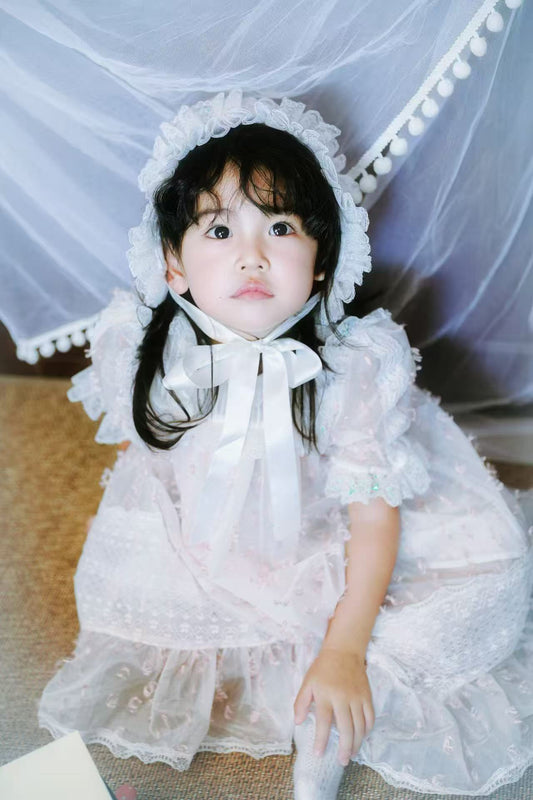
One Dress, Three Interpretations
Aug 10 2026
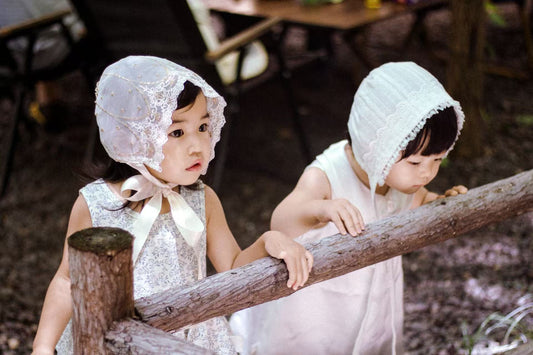
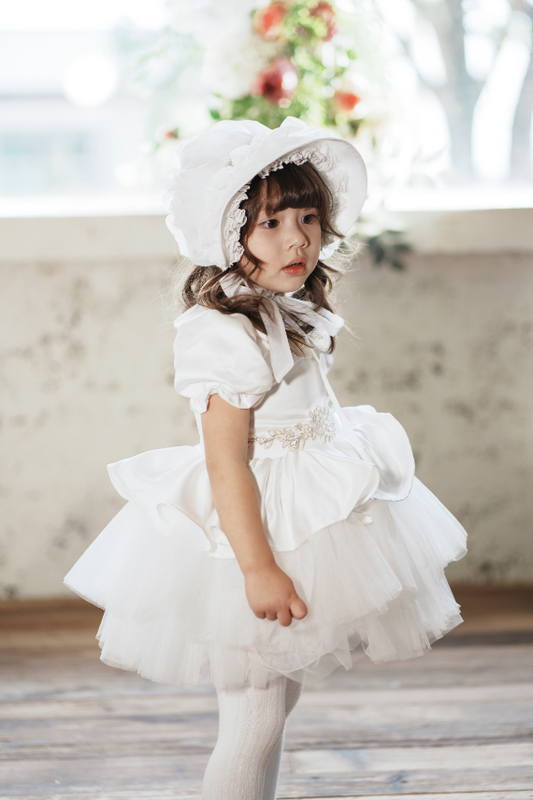
Why Baby Bonnets Are More Than a Hat?
Jul 13 2026
What Is a Christening Gown?
Jul 08 2026
The world about HANAKIMI
Jun 09 2026